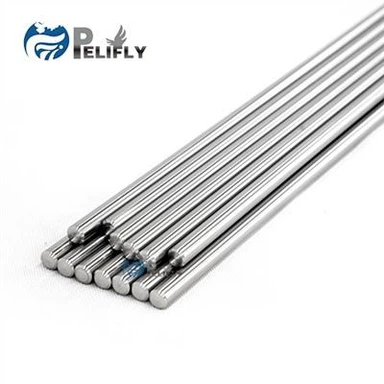

Reasons for difficulties in machining titanium alloys
Jun 24, 2023
Titanium alloys, including TC4 (Ti-6Al-4V), can be challenging to machine due to several factors:
High Strength and Hardness: Titanium alloys are known for their excellent strength-to-weight ratio, making them desirable for many applications. However, this high strength and hardness make them more difficult to machine compared to softer materials. It requires more force and specialized tools to cut through titanium alloys, resulting in increased tool wear and reduced tool life.
Low Thermal Conductivity: Titanium alloys have low thermal conductivity, meaning they do not dissipate heat efficiently during machining. This leads to heat concentration at the cutting edge, causing tool temperatures to rise quickly. Elevated temperatures can lead to tool wear, tool failure, and potential damage to the workpiece.
Chemical Reactivity: Titanium has a strong affinity for oxygen, and when exposed to air, it forms a thin, tenacious oxide layer on its surface. This oxide layer acts as a protective barrier against further oxidation but can also cause problems during machining. The oxide layer can react with cutting tools, resulting in increased tool wear and poor surface finish. Special care must be taken to prevent contamination and maintain the integrity of the cutting tools.
Low Elastic Modulus: Titanium alloys have a relatively low elastic modulus compared to other metals. This characteristic can lead to higher cutting forces and vibration during machining, which can affect the dimensional accuracy of the machined parts and result in poor surface finish.
Work Hardening: Titanium alloys tend to work hard during machining. As the cutting tool engages the material, it can cause localized deformation and strain hardening, making subsequent cutting more challenging. This work-hardening effect requires a careful selection of cutting parameters and tool geometry to minimize its impact.
To overcome these challenges, machining titanium alloys often requires the use of specialized cutting tools made from high-speed steel, carbide, or cubic boron nitride (CBN). Cutting parameters such as cutting speed, feed rate, and depth of cut must be carefully optimized to balance material removal and tool life. Additionally, the use of coolants or lubricants can help manage heat generation and improve chip evacuation during machining operations.