

Why Choose Us?
Rich Experience
Baoji Pelifly Titanium Industry Co., Ltd is a high-tech enterprise engaged in the research, production, and sales of Titanium and Nitinol alloy and Refractory metal.
Advanced Equipment
We have advanced equipment, Fully automatic control ALD vacuum consumable arc furnace, Hydraulic press, precision wire rod rolling machine, forging machine, centerless grinding machine, pulling and straightening machine, sawing machine, CNC machine tools, and milling machine and other production equipment.
Reliable Product Quality
"Quality is the life of an enterprise", we follow this principle and strictly control the quality of our products. From the selection of raw materials to the chemical composition and mechanical properties of the products tested by China's most authoritative national metal research institute, each finished product can pass the SGS test.
Wide Market
Our products are exported all over the world, and we have established long-term and stable trade relations with Germany, the United States, Russia, Brazil, India, Indonesia, Sweden, Korea, Finland, and other countries and regions. Due to the high quality, reasonable price and our sincere service, we have won a good reputation at home and abroad.
What is Refractory Metal?
Refractory metals are a class of metals that are extraordinarily resistant to heat and wear. They all share some properties, including a melting point above 2000 °C and high hardness at room temperature. They are chemically inert and have a relatively high density. Their high melting points make powder metallurgy the method of choice for fabricating components from these metals. Some of their applications include tools to work metals at high temperatures, wire filaments, casting molds, and chemical reaction vessels in corrosive environments. Partly due to the high melting point, refractory metals are stable against creep deformation to very high temperatures.
-
![Prouse Tungsten Rod]() Add to Inquiry
Add to Inquiry -
![Monel 400 Nickel Copper Alloy Plates]()
Monel 400 Nickel Copper Alloy Plates
Add to Inquiry -
![Pure Nickel Tubes]() Add to Inquiry
Add to Inquiry -
![Nickel alloy Pipes]() Add to Inquiry
Add to Inquiry -
![N6 Nickel Plates]() Add to Inquiry
Add to Inquiry -
![Ni200 Ni201 Nickel Strips]() Add to Inquiry
Add to Inquiry -
![Pure Molybdenum Rods]() Add to Inquiry
Add to Inquiry


Advantages of Refractory Metal
Strength at high temperatures
Refractory metals are heat resistant. Their high melting points enable them to be good conductors of heat, making them perfect for industries that are in need of metals that need to withstand extreme temperatures. As well as having temperatures which exceed 2,000°C, refractory metals can withstand high pressure and impact- so they, therefore, last longer than other metals!
Resistance to thermal shock
Do you need a metal that doesn’t expand? Refractory metals are perfect for you. These metals do not crack under high pressure or high temperature. This is because of their particularly high melting points- making them useful for things such as heating elements and medical parts. The metal Molybdenum, for example, is a refractory metal that is very hard and pure, it has a melting point of 2,620°C. This metal has high thermal conductivity, hence why it is used for aerospace parts!
High density
Special metals such as Tungsten are good electrical and heating conductors. This stems from the fact that the metal has a high density (is found to be very heavy) and is strong enough to carry currents effectively. Tungsten has the highest melting point out of all the refractory metals- which makes it very robust and high in strength. These metals can be effective for the manufacturing of x-ray targets, which is because they are reliable and have the capability to withstand heat to a certain extent.
Resistance to deformation
Often metals have the tendency to “creep”, meaning deform, when they are put under stress and extreme temperatures. However, refractory metals are resistant to such pressure- meaning that they are less likely to change in shape once heated. The resistance to deformation makes them useful for furnace parts- maintaining their structure for longer periods of time.
Resistance to corrosion
Do all metals corrode? Although this does tend to be the case, refractory metals are different. They are made up of a number of elements, causing the addition of a protective layer – by combining these properties they have greater resistance than single elements! At high temperatures, refractory metals can easily oxidise, meaning they combine chemically with oxygen.
Types of Refractory Metal
Molybdenum
Molybdenum is number 42 on the periodic table with a melting point of 2610 degrees C and a density of 10.22 gm/cc. Moly has many properties that make it an excellent candidate for fabricated parts and it’s the most commonly used refractory metal. Molybdenum is the lamp industry standard for mandrels and supports, usually in wire form. Several unique properties of molybdenum that satisfy more demanding industry requirements have increased the use of molybdenum as a material in applications requiring other mill forms. Molybdenum is machinable and is fabricated into high temperature furnace hardware and lighting components.
Tungsten
Tungsten is number 74 on the periodic table, in between tantalum and rhenium. Tungsten has the highest melting point (3410 degrees C) of the four common refractory metals. In addition, with a density of 19.3 gm/cc, it is only surpassed by rhenium and osmium in weight. Tungsten has a long history of use for filaments in the lamp industry. It offers exceptionally high strength at very high temperatures. In fact, it has the best high-temperature strength of the four common refractory metals. Its high-temperature strength, combined with its good electrical resistivity have made it a popular choice for other applications in addition to filaments. Tungsten’s high density and strength are utilized in aircraft counterweights, radiation shielding, weapon systems, golf clubs, high temperature furnaces and rocket nozzles.
Tantalum
Tantalum is number 73 on the periodic table. It has a melting point of 2996 degrees C and a density of 16.654 gm/cc. Tantalum is one of the refractory metals that offers a valuable combination of properties. Tantalum is one of the most corrosion resistant metals available. It’s used in chemical reactors, medical implants and highly acidic environments. Tantalum and its alloys are midway between tungsten and molybdenum in density and melting points. Tantalum can be worked easily at room temperature. Its thermal conductivity is one-fourth that of molybdenum and its coefficient of expansion is one-third greater. Its elevated temperature strength is low compared with tungsten and molybdenum.
Niobium
Niobium, also known as Columbium, is number 41 on the periodic table. With a melting point of 2468 degrees C, it qualifies as a refractory metal. Niobium has a density of 8.57 gm/cc. It has many properties that make it an excellent candidate for fabricated parts that must be made of a refractory metal. Niobium offers good ductility and weld-ability under a clean, dry inert gas or a vacuum. Niobium can be found in electrolytic capacitors, superconductor alloys, gas tubings, vacuum tubes and nuclear reactors.
1. Aerospace and Defense
The defense and aerospace industries require materials with superior thermal and mechanical durability. For defense and aerospace applications, refractory metals are an essential class of materials as they supply a foundation for strength retention to temperatures as high as 2200°C. Niobium is especially useful for applications in aerospace because of its comparatively low density, which is equivalent to that of nickel.
2. Chemicals/Catalysts
Due to its extreme inertness, tantalum is predominantly used in the chemical industry. Spargers, reaction vessels and heat exchangers all utilize tantalum to reject the corrosive effects of nitric, sulfuric, and hydrochloric acids, along with liquid metals and organic chemicals.
3. Electronics and Semiconductors
In general, refractory metals have strong electrical conductivity. This means they can be employed to manufacture very hard-wearing and durable electrical components. For example, long-life contact points can be created from refractory metals alloyed with copper, gold, or silver.
4. Industrial Parts
The high-temperature tolerance and durability of refractory metals make them an ideal solution for industrial parts, which may be exposed to extreme thermal and/or mechanical stress, such as furnace boats, glass melting electrodes, crucibles, shields, tubes, sintering trays, rods, sheets, and nozzles.
5. Medical
Refractory metals are frequently used in medical devices. For example, tantalum has applications in dental and medical devices because it is durable and tough and does not impact bodily tissues. Molybdenum is often employed in medical scanning tools, being used in X-ray detectors and tubes. For radiation shields, tungsten is the material of choice due to its high density of 19.3 g/cm3, which means it delivers notably higher radiation absorption compared to lead.
6. Nuclear
Applications in the nuclear industry commonly use niobium, molybdenum, and tungsten. Tungsten heavy metals are mainly utilized in radiation shielding, which takes advantage of the heat resistance and high density of tungsten to diminish x-rays and gamma-rays. Niobium zirconium alloys are employed as structural components in nuclear reactors, where their resistance to liquid metals and low neutron absorption cross-section are beneficial.
7. Superconductors
Niobium and tantalum are often employed in low-temperature superconductor applications, such as MRI machines for medical imaging and additional analytical and experimental equipment, for example, mass spectrometry, particle accelerators, and NMR..

Refractory metals are typically found in ores with other minerals and metals, making their extraction a complex process. Some of the primary sources of refractory metals include mines in China, Russia, and Canada.
The mining process for refractory metals involves a variety of techniques, including open-pit mining, underground mining, and heap leaching. Once the ore is extracted, it is typically processed using methods such as flotation or gravity separation to isolate the refractory metal from other minerals and metals.
The extraction process for refractory metals can be difficult and costly due to the high melting points and resistance to chemical reactions of these metals. Tungsten, for example, is typically extracted through a complex process involving roasting, grinding, and magnetic separation.
For metal buyers, it's important to consider the source of the metal and the mining practices used. Ethical and sustainable mining practices are becoming increasingly important to many buyers, and there are certifications available for companies that meet certain standards in their mining operations.
Refining Refractory Metals: Techniques and Challenges
Refining refractory metals is a complex process that involves removing impurities to improve the quality of the metal. The most common refining techniques for refractory metals include chemical refining, electro-refining, and vacuum refining.
One of the biggest challenges in refining refractory metals is their high melting points, which can make the process difficult and energy-intensive. Additionally, refractory metals often contain a variety of impurities, which can be difficult to remove without affecting the metal's properties.
Despite these challenges, advances in refining techniques have allowed for the production of high-quality refractory metals with minimal impurities.
Properties of Refractory Metals
Low-Temperature Brittleness
Refractory metals will not easily crack or break under high temperatures and can bear repeated heating or thermal shock. Tungsten, molybdenum, chromium, and other refractory metals at low temperatures are likely to become brittle while turning into ductile under high-temperature conditions. Ductile-Brittle transition temperature (DBTT) is an important index for ductility processing and usage of refractory metals. DBTT can be influenced by many factors, like the material’s purity, ingredients of alloys, processing methods, and structures.
Oxidation Resistance
Refractory metals of high density are very stable at room temperature and not easy to be oxidized in air. However, refractory metals will be rapidly oxidized under high temperatures. Tungsten and molybdenum begin to oxidize at about 752° F. They will be oxidized and generated respectively into WO3 and MoO3 with the temperature going up. When the temperatures reach 1562°F and 1112°F, the materials will be sublimated markedly. Rhenium starts to oxidize at 572°F and turns into Re2O7 at a temperature of 662°F.
Oxidation Resistance
Tungsten, molybdenum, and rhenium do not react with hydrogen but their oxides can be reduced to the metal with hydrogen at a certain temperature. Tungsten, molybdenum, and rhenium can become brittle when absorbing hydrogen. When the temperature reaches between 572°F to 932°F, those metals will absorb the large quantity of hydrogen and generate brittle metal hydride. In high vacuum conditions, hydrogen will be released. Therefore, this feature of refractory metals can be used for producing the alloy powder of titanium, zirconium, tantalum, and niobium.
Corrosion Resistance
Refractory metals have good corrosion resistance. When the temperature is under 302°F, the surface of the tantalum has a dense and stable oxide film. Therefore, the chemical properties of tantalum are very stable. Tantalum has excellent resistance towards sulfuric acid, hydrochloric acid, nitric acid, phosphoric acid, organic acids, and nitric acid hydrochloride but will be melting in hydrofluoric acid, concentrated alkali solution, and molten base.
How to Calculate the Weight of Refractory Metals
Every metal has a specific density expressed in grams per centimeter3. This is the metal’s mass per unit of volume. Example: Density of pure molybdenum = 10.14 grams/centimeter3. Therefore, in every cubic centimeter of molybdenum, there are 10.14 grams of mass. You can find the specific density of your metal by searching for a “metal density table” on the internet.
The formula used to determine metal weight in kilograms:
Sectional Area (mm2) x Length (m) x Density (g/cm3) / 1,000.
To Calculate the Weight of a Metal Product:
1. Determine the specific density of the metal to be weighed.
If your dimensions are in imperial measurement, convert to metric by dividing the imperial number by .03937 (1 millimeter). Example: 1” x 4” x 6” equals 25.4mm x 101.6mm x 152.4mm
2. Determine the cross-sectional area of your part by multiplying the thickness of the part times the width. Example: Sectional area: 25.4mm thick x 101.6mm wide = 2,580.64mm2
3. Determine the length of your part in meters (1,000 millimeters = 1 meter). Example: Length equals 152.4mm = .1524 meters
4. Multiply the sectional area (mm2) x length (m) x density (grams/cm3) and divide by 1,000 to determine the weight in kilograms. Example: Using the specific density for pure molybdenum plate with measurements of 1” x 4” x 6” (25.4mm x 101.6mm x 152.4mm): 2580.64 x .15240 x 10.14 = 3,987.955 grams / 1,000 = 3.9879 kilograms.
Factors to Consider When Buying Refractory Metals
Purity
Refractory metals should have high levels of purity in order to ensure optimal performance in their intended application.
Form
Refractory metals are available in various forms such as sheets, rods, and wires. The form you choose will depend on your specific application and requirements.
Size and dimensions
The size and dimensions of the refractory metal should be carefully considered to ensure that it will fit your intended use.
Price
Refractory metals can be expensive due to their high melting points and the difficulty in refining and processing them. It's important to consider the price of the metal and how it fits into your budget. And buyers should keep a close eye on price movements.
Our Factory
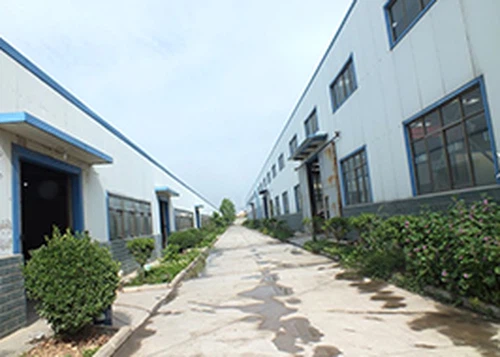
Baoji Pelifly Titanium Industry Co., Ltd is a high-tech enterprise engaged in the research, production, and sales of Titanium and Nitinol alloy and Refractory metal. Our company is located in Baoji High-Tech Development Zone which is the famous "China Titanium Valley". We have advanced equipment, Fully automatic control ALD vacuum consumable arc furnace, Hydraulic press, precision wire rod rolling machine, forging machine, centerless grinding machine, pulling and straightening machine, sawing machine, CNC machine tools, and milling machine and other production equipment, aerospace, medical high-end titanium alloy materials 1000 tons of production capacity.



Ultimate FAQ Guide to Refractory Metal
As one of the leading refractory metal manufacturers and suppliers in China, we warmly welcome you to buy high-grade refractory metal for sale here from our factory. from our factory. All our products are with high quality and competitive price.
High Purity Titanium Foil and Strip, Titanium Coiled Sheets, Titanium Straight Wire