

Why Choose Us?
Rich Experience
Baoji Pelifly Titanium Industry Co., Ltd is a high-tech enterprise engaged in the research, production, and sales of Titanium and Nitinol alloy and Refractory metal.
Advanced Equipment
We have advanced equipment, Fully automatic control ALD vacuum consumable arc furnace, Hydraulic press, precision wire rod rolling machine, forging machine, centerless grinding machine, pulling and straightening machine, sawing machine, CNC machine tools, and milling machine and other production equipment.
Reliable Product Quality
"Quality is the life of an enterprise", we follow this principle and strictly control the quality of our products. From the selection of raw materials to the chemical composition and mechanical properties of the products tested by China's most authoritative national metal research institute, each finished product can pass the SGS test.
Wide Market
Our products are exported all over the world, and we have established long-term and stable trade relations with Germany, the United States, Russia, Brazil, India, Indonesia, Sweden, Korea, Finland, and other countries and regions. Due to the high quality, reasonable price and our sincere service, we have won a good reputation at home and abroad.
What is Titanium Materials?
Titanium in its pure form is a silvery metal known for its strength and low density compared to other similarly hard metals. In most industries, however, titanium alloy is much more commonly used. Because of its physical and chemical properties, the metal has become useful in a wide variety of industries and applications such as medical equipment, chemical plants, military installations, and sports gear.
-
![Titanium Alloy Rods Gr.12]() Add to Inquiry
Add to Inquiry -
![Titanium Bar Gr.5 Eli ASTM F136]()
Titanium Bar Gr.5 Eli ASTM F136
Add to Inquiry -
![ERTI-2 ELI Titanium Welding Wire For Pressure Vessels]()
ERTI-2 ELI Titanium Welding Wire For Pressure Vessels
Add to Inquiry -
![ER Ti-2 Titanium Electrode Rods]()
ER Ti-2 Titanium Electrode Rods
Add to Inquiry -
![ER-Ti12 Titanium Welding Straight Wire]()
ER-Ti12 Titanium Welding Straight Wire
Add to Inquiry -
![Ti80A Titanium Welding Straight Rods]()
Ti80A Titanium Welding Straight Rods
Add to Inquiry -
![ASTM F67 Medical Titanium Pipe]()
ASTM F67 Medical Titanium Pipe
Add to Inquiry -
![ASTM B338 GR.7 Titanium Seamless Tubes For Condenser And Heat Exchanger]()
-
![Titanium 6AL4V Gr5 Seamless Tube]()
Titanium 6AL4V Gr5 Seamless Tube
Add to Inquiry -
![Titanium Alloy Seamless Tubes ASTM338]()
Titanium Alloy Seamless Tubes ASTM338
Add to Inquiry -
![Titanium Coiled Wire ASTM B863]()
Titanium Coiled Wire ASTM B863
Add to Inquiry -
![Titanium Electrode Rod AWS A5.16]()
Titanium Electrode Rod AWS A5.16
Add to Inquiry


1. High Melting Point
All metals have a melting point — and titanium material is no exception. titanium material, however, has a higher melting point than many other metals, including iron, aluminum, tin and copper. It takes temperatures in excess of 3,304 degrees Fahrenheit to melt titanium material. With such a high melting point, titanium material can be used in hot environments where other metals and alloys can’t be used.
2. High Strength and Low Density
Titanium material has the highest strength-to-density ratio of all metals on the periodic table; its strength-to-density ratio is even higher than that of steel’s. Titanium material isn’t necessarily stronger than steel. They are both offer relatively the same amount of strength. titanium material, however, is about half as dense as its steel counterpart. titanium material’s high strength-to-density ratio makes it particularly effective for use in the aerospace manufacturing industry.
3. Corrosion Resistance
Another key advantage of titanium material in the manufacturing industry is corrosion resistance. Many metals and alloys rust when exposed to oxygen. Oxygen in the air or water causes them to oxidize. As oxidation occurs, a layer of rust will begin to form. titanium material, on the other hand, has a natural defense mechanism that protects it from rust. When exposed to oxygen, titanium material will develop a layer of titanium material dioxide. This layer, while invisible, shields the underlying titanium material from oxygen that would otherwise contribute to rust and corrosion.
4. Lightweight
Titanium material weighs less than most other metals and alloys. When compared to steel, titanium material weighs about half as much. This is another reason why aerospace manufacturing companies use it. You’ll often find fuselages made of titanium material. titanium material is just as strong as steel, but it only weighs about half as much. Therefore, it allows for the construction of strong and lightweight fuselages for airplanes.
5. Recyclable
Titanium material is recyclable, thus allowing manufacturing companies to minimize waste. It can be melted down and reused in future applications. Furthermore, since it doesn’t suffer from corrosion, titanium material doesn’t deteriorate. Products made of titanium material will maintain their structure so that they can be recycled many years down the road. In this regard, titanium material is 100% recyclable.
Forms of Titanium Material
● Titanium sheets are manufactured in a variety of thicknesses and sizes and can be produced with pure titanium or alloys, as needed.
● Titanium plates are thicker than titanium sheets and can also be manufactured to various size specifications, with both pure titanium or alloys. Titanium sheets and plates are frequently used in the construction of aircraft exteriors.
● Titanium tubing are hollow cylindrical components of various diameters. They are often used in the construction of hydraulics for automotive and aerospace machinery and lightweight frames for high-performance bicycles and motor vehicles.
● Titanium round bars are highly versatile and can be manufactured to various specifications, from small wires for dental and surgical implants to larger bars for aerospace and automotive components.
● Titanium pipes are typically wider in diameter than tubes and are useful for the conveyance of corrosive liquid and gaseous substances, especially in systems exposed to high heat or pressure.
● Titanium wires are strong, non-corrosive, and flexible and can be used for orthodontic implants and joint reconstruction in the medical industry. As the base material is hypoallergenic and easily manipulated, titanium wire is also commonly used among jewelry makers.
● Titanium Powders are ideal for all additive manufacturing processes, such as Direct metal deposition (DED), Direct metal laser sintering (DMLS), Electron beam melting (EBM), Laser metal deposition (LMD), Metal injection molding (MIM), Selective laser melting (SLM).
1. Jewelry
Titanium material is commonly used in jewelry to make piercings, wristwatches, necklaces, rings, and other items due to its durability, light weight, and corrosion resistance. Additionally, titanium material is sometimes mixed with gold to make 24-karat gold alloys which are harder and more durable than pure gold alternatives. Because of its biocompatibility, titanium material is popular among people who have allergies to other metals often found in jewelry, such as nickel.
2. Medical
Titanium material is a highly critical metal in the medical industry due to its high strength, fatigue resistance, and biocompatibility. titanium material is often used in surgical and dental tools, implants, and joint replacements. Osseointegration, the ability of a bone and artificial implant to form a structural and functional connection, is possible with titanium material. titanium material’s biocompatibility and non-toxicity enable better patient outcomes and durable and strong implants and prosthetics that can last up to 30 years.
3. Industrial
Titanium material is commonly used in a broad range of industrial environments due to its high strength and fatigue resistance, corrosion resistance, light weight, and durability. Uses of titanium material in industrial settings include heat exchangers, tanks, reactors, valves, pipes, connecting rods, pumps, and more.
4. Aerospace
Titanium material is a great choice for the manufacture of aerospace parts and vehicles and accounts for nearly 50% of the total weight of an aircraft. It is often used to manufacture critical parts such as landing gear, firewalls, and hydraulic systems. titanium material is valued in the aerospace industry because of its low density, high strength-to-weight ratio, corrosion resistance, and fatigue resistance.
5. Architectural
Titanium material is ideal for architectural products due to its light weight, high strength, corrosion resistance, and durability. While steel is still preferred to titanium material when it comes to building frames, titanium material is often used for glass frames, facades, roofs, interior wall surfaces, and ceilings due to its corrosion resistance and high strength-to-weight ratio.
6. Automotive Industry
Titanium material is often used in the automotive industry to make engine parts, crankshafts, valve seats, connecting rods, exhaust systems, suspension systems, and automotive frames. titanium material is highly coveted in the automotive industry due to its low density, high strength-to-weight ratio, corrosion resistance, and heat resistance. Not only do these characteristics of titanium material enable improved aerodynamics and performance, but its low density and high strength also lead to a more cost-effective manufacturing process since less material is used to satisfy particular applications.
7. Chemical Processing
Titanium material is often used in the chemical processing industry due to its corrosion resistance and chemical inertness. While the reactivity of titanium material significantly increases at higher temperatures (>700 °F), titanium material is generally unreactive and stable at lower temperatures. titanium material is often used in pipes, flanges, tubing, tanks, pumps, and heat exchangers.
What Are the Common Grades of Titanium Material?
1. Grade 11
Grade 11, also known as CP Ti-0.15Pd, is commercially pure titanium material, similar to Grade 1 and Grade 2. Grade 11 provides enhanced crevice corrosion resistance due to added palladium. It also has high ductility, impact toughness, and weldability. Grade 11 is commonly used in chemical processing and storage, ducts, pumps, and heat exchangers.
2. Grade 12 or Ti 0.3-Mo 0.8-Ni
Grade 12 titanium material, also known as Ti 0.3 Mo 0.8 Ni, is a durable, corrosion-resistant, and thermally stable titanium material alloy that is valued for its weldability and formability. Grade 12 titanium material alloy contains up to 99% titanium material, 0.6-0.9% nickel, 0.2-0.4% molybdenum, up to 0.3% iron, up to 0.25% oxygen, and other elements.
3. Grade 4
Grade 4 titanium material is the strongest commercially pure titanium material. Grade 4 titanium material’s strength rivals that of stainless and low-carbon steel, which makes the material a lighter-weight alternative. Because of its strength and corrosion resistance, Grade 4 is commonly used in aerospace, chemical processing, and marine components such as airframe structures and heat exchangers.
4. Grade 5 or Ti 6Al-4V
Grade 5 is the most commonly used titanium material alloy. It accounts for around half of all the titanium material used in the world. It has exceptionally high strength, heat resistance, ability to be heat treated, formability, and corrosion resistance. Grade 5 is also known as Ti 6Al-4V due to the percentage of aluminum and vanadium in the alloy.
5. Grade 7
Grade 7 is a titanium material alloy that is nearly identical to Grade 2 titanium material. The only difference between Grade 7 and Grade 2 is the addition of palladium in Grade 7 alloys. The composition of Grade 7 titanium material is 99% titanium material, 0.12-0.25% palladium, 0.3% iron, 0.25% oxygen, and other elements. Grade 7 has the highest corrosion resistance of all titanium material alloys and exhibits excellent weldability and forming properties.
6. Grade 1
Grade 1 is the softest and most ductile pure titanium material grade. Therefore, Grade 1 titanium material possesses the best formability out of the different types of titanium material. Grade 1 titanium material is composed of 99% titanium material, 0.2% iron, 0.18% oxygen, and trace amounts of other elements such as nitrogen, carbon, and hydrogen.
7. Grade 3
Grade 3 is the least commonly used pure titanium material grade. Grade 3 is stronger than Grade 1 and Grade 2 titanium material, but also has slightly less ductility and formability. Grade 3 is commonly used in cryogenic vessels, condenser tubing, heat exchangers, and other chemical processing equipment.
8. Grade 6 or Ti 5Al-2.5Sn
Grade 6 titanium material is a titanium material alloy containing approximately 5% aluminum, 2.5% tin, and 0.5% iron. The addition of aluminum and tin improves titanium material’s creep resistance and temperature stability. Grade 6 is preferred for higher service temperatures around 900 °F where it is often used for casings and rings in turbine engines.
9. Grade 2
Grade 2 is another commercially pure titanium material and is the most commonly used commercially pure grade. Like other commercially pure titanium material grades, it contains 99% titanium material but differs from other pure grades in that it contains 0.3% iron, 0.25% oxygen, and trace amounts of other elements. The larger oxygen percentage allows Grade 2 titanium material to be stronger than Grade 1.
10. Grade 23 or Ti 6AL-4V ELI
Grade 23 titanium material, also known as Ti 6Al-4V ELI due to its chemical composition, has high tensile and yield strength, toughness, ductility, and weldability. It has a composition of 88-90% titanium material, 5.5-6.5% aluminum, 3.5-4.5% vanadium, 0.25% iron, 0.13% oxygen, and other elements.

● Density: Titanium material’s density is 4.506 g/cm3.
● Strength: The strength of titanium material depends on the grade of titanium material and the concentration of its alloying elements. The strength of titanium material ranges from 240 MPa (commercially pure Grade 1) to 1241 MPa (Ti-10V-2Fe-3Al alloy).
● Color: titanium material has a lustrous, silvery-white color.
● Ductility: Titanium material ductility ranges from 6% elongation (Ti-3Al-8V-6Cr-4Zr-4Mo) to 25% (Commercially Pure Grade 1).
● Durability: Titanium material is highly durable and has a long expected life due to its high tensile yield strength, hardness, and excellent fatigue resistance.
What Are the Chemical Properties of Titanium Materials?
Oxidation Potential
Titanium has an oxidation potential due to its electron configuration and its classification as a transition metal. Because of its high oxidation potential, titanium is not found in its pure form in nature and is instead found as oxides in rocks and minerals.
Ability to Form Alloys
Titanium can easily form alloys with other metals and elements due to its atomic size and its classification as a transition metal. Many different titanium alloys exist.
Reactivity
Titanium is reactive to acids, and halogens at high temperatures and entirely non-reactive to bases.
Corrosion Resistance
Titanium is naturally corrosion-resistant due to its tendency to react with oxygen and nitrogen. The formation of oxides on the surface of titanium protects the underlying material from corrosive agents.
Tips for Effective Machining of Titanium Materials
Firstly, you need to make sure you are using the right tools and equipment for the job. This may seem pretty obvious, but it's a crucial step in any editing process. titanium materials are more difficult to machine due to their greater hardness. Always use high-speed steel tools and carbide drill bits when cutting titanium. Steel tools dull quickly with this material, while carbide bits cut cleanly and last longer.
An important aspect of efficiently machining titanium is the transfer of generated heat to the chip. This helps keep the part, tool and coolant at a relatively constant temperature. The most effective way to do this is to use a machine with a horizontal spindle for machining titanium. Another way to direct the heat generated to the chip is to increase the feed rate of the part. A higher feed rate can help maintain a constant temperature during the machining process. This can be particularly useful when machining large part sizes.
As already mentioned, titanium materials have higher thermal conductivity than other metals. Therefore, when processing these materials, the concentration and pressure of the coolant must be increased. Increasing the coolant concentration can help reduce the heat generated in the engine. It can also help keep the part and tool at a relatively constant temperature, allowing the part's feed rate to increase. If you use a water-based coolant, you can increase the concentration of that fluid by adding an antifoaming agent. A good option for an anti-foaming agent is sodium salts, which help to increase the boiling point and viscosity of water.
Titanium materials typically have lower lubricity than other metals. This means they are more likely to eat it while processing. Seizure is a phenomenon that occurs when two opposing metal parts come into contact and one part becomes trapped between the two. Seizing can make the machining process significantly more difficult and significantly reduce tool life. You can avoid galling when machining titanium materials by using a lower feed rate and lower spindle speed. If you already notice seizing, you can often correct the problem by increasing the coolant concentration. This can help break through the existing irritation and continue the editing process.
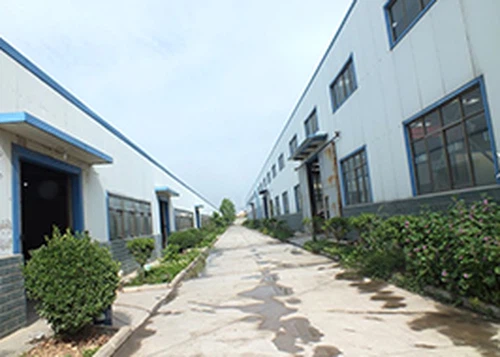
Our Factory
Baoji Pelifly Titanium Industry Co., Ltd is a high-tech enterprise engaged in the research, production, and sales of Titanium and Nitinol alloy and Refractory metal. Our company is located in Baoji High-Tech Development Zone which is the famous "China Titanium Valley". We have advanced equipment, Fully automatic control ALD vacuum consumable arc furnace, Hydraulic press, precision wire rod rolling machine, forging machine, centerless grinding machine, pulling and straightening machine, sawing machine, CNC machine tools, and milling machine and other production equipment, aerospace, medical high-end titanium alloy materials 1000 tons of production capacity.



Ultimate FAQ Guide to Titanium Materials
As one of the leading titanium materials manufacturers and suppliers in China, we warmly welcome you to buy high-grade titanium materials for sale here from our factory. from our factory. All our products are with high quality and competitive price.
Titanium Hexagon Bar, Titanium Gr 2 Welded Pipe, Titanium Bar