

Why Choose Us?
Rich Experience
Baoji Pelifly Titanium Industry Co., Ltd is a high-tech enterprise engaged in the research, production, and sales of Titanium and Nitinol alloy and Refractory metal.
Advanced Equipment
We have advanced equipment, Fully automatic control ALD vacuum consumable arc furnace, Hydraulic press, precision wire rod rolling machine, forging machine, centerless grinding machine, pulling and straightening machine, sawing machine, CNC machine tools, and milling machine and other production equipment.
Reliable Product Quality
"Quality is the life of an enterprise", we follow this principle and strictly control the quality of our products. From the selection of raw materials to the chemical composition and mechanical properties of the products tested by China's most authoritative national metal research institute, each finished product can pass the SGS test.
Wide Market
Our products are exported all over the world, and we have established long-term and stable trade relations with Germany, the United States, Russia, Brazil, India, Indonesia, Sweden, Korea, Finland, and other countries and regions. Due to the high quality, reasonable price and our sincere service, we have won a good reputation at home and abroad.
What is Nitinol(Niti) SMA?
Nitinol is a type of smart material known as a shape-memory alloy (SMA). It is primarily composed of nickel (Ni) and titanium (Ti), typically in nearly equal atomic proportions. What sets Nitinol apart is its unique property known as the shape-memory effect (SME). This phenomenon allows Nitinol to “remember” its original shape and return to it when subjected to specific temperature changes. The transition temperature, also known as the transformation temperature, is a critical factor that determines Nitinol’s behavior.
-
![Nitinol Wire With Welded Balls At Both Ends]()
Nitinol Wire With Welded Balls At Both Ends
Add to Inquiry -
![Nitinol Shape Memory Alloy Foil]()
Nitinol Shape Memory Alloy Foil
Add to Inquiry -
![Nitinol Pipes For Medical Use]() Add to Inquiry
Add to Inquiry -
![Nitinol SMA Sheets]() Add to Inquiry
Add to Inquiry -
![Nitinol Shape Memory Alloy Plates]()
Nitinol Shape Memory Alloy Plates
Add to Inquiry -
![Nitinol Medial Wire ASTM F2063]()
Nitinol Medial Wire ASTM F2063
Add to Inquiry -
![Nitinol One Way Memory Alloy Springs]()
Nitinol One Way Memory Alloy Springs
Add to Inquiry -
![Nitinol shape memory alloy springs]()
Nitinol shape memory alloy springs
Add to Inquiry -
![Nitinol Flat Wire]() Add to Inquiry
Add to Inquiry -
![Nitinol Strips]() Add to Inquiry
Add to Inquiry -
![Nickel-titanium Memory Alloy Tube]()
Nickel-titanium Memory Alloy Tube
Add to Inquiry -
![Nickel Titanium Shape Memory Alloy Wire]()
Nickel Titanium Shape Memory Alloy Wire
Add to Inquiry


Advantages of Nitinol(Niti) SMA
Corrosion Resistance
Gold and platinum are highly corrosion-resistant materials. Plating Nitinol devices with these precious metals forms a protective barrier that prevents the alloy from corroding when exposed to bodily fluids, ensuring the longevity of the device.
Biocompatibility
Gold and platinum are biocompatible, meaning they do not trigger adverse reactions when in contact with the human body. This is particularly important in medical devices where the patient’s safety and well-being are paramount.
Reduced Friction
The smooth surface of gold and platinum helps reduce friction between the Nitinol device and the body’s tissues. This can enhance the ease of insertion and minimize trauma during medical procedures.
Electrical Conductivity
Nitinol, in its native form, has relatively low electrical conductivity. In applications involving active implantable devices like cardiac pacemakers or neurostimulators, efficient electrical conductivity is essential. Gold and platinum plating significantly enhances the surface conductivity of Nitinol devices. This feature is crucial for ensuring the proper transmission of electrical signals within the body, such as in pacemaker leads.
Radiopacity
Nitinol is relatively radiolucent, making it challenging to visualize during procedures. Gold and platinum are highly radiopaque materials, and plating Nitinol devices with them substantially improves visibility under X-ray or fluoroscopic imaging. This enhanced visibility aids healthcare professionals in accurately monitoring the placement and performance of medical devices, ensuring precise positioning and functionality.
Medical Applications of Nitinol(Niti) SMA
1. Pipe mirror of nitinol
The use of nitinol shape memory alloy as the driving force of the tubular mirror can be achieved by remote control of various complex movements of the tubes of the human body ,with this tubular mirror, surgeons can perform microsurgical operations on blood vessels and so on.
2. Device for releasing the drug of nitinol
Researchers have invented a drug-releasing device that can be placed in the human body to eliminate pain and problems caused by prolonged injection.A miniature valve on the device for the release of drugs is activated by elements made of an alloy with a memory of the shape of nitinol.The opening and closing of the miniature valve is controlled by heating or cooling the nitinol memory alloy element.
3. Tactile gloves of nitinol
Tactile gloves made of nitinol shape memory alloy, developed by American scientists, can reflect the magnitude of the force of touch and contact ,avoiding the phenomenon when doctors often make mistakes when performing microsurgical operations using micromachines or robots, because they do not feel a little on their hands during the control process. Its main principle is:the output signal of the sensor is converted into a certain size of the heating current, so that the temperature of the nitinol shape memory alloy element regulates the amount of force acting on the doctor’s hand.
4. Microsurgical Forceps of nitinol
Miniature surgical forceps made of nitinol shape memory alloy were invented by American researchers for the surgical treatment of brain tumors in the event of a stroke.
5. Capillaries of nitinol
Capillaries made of nitinol shape memory alloy are very soft in various parts of the human body, which can be injected into a certain part of the human body and other procedures can be performed.This feature takes advantage of the superelasticity characteristics of the memory alloy and the low elastic modulus.
6. Rehabilitation equipment of nitinol
There is a certain correspondence between the EMG signals on a person’s limbs and the action they want to achieve. However, the way people with disabilities use this signal to control the movement of prostheses can solve this problem with the help of such prostheses made of a nitinol shape memory alloy.The basic principle is to convert the EMG signal into the heating current of the nitinol shape memory alloy.
7. Micro-pump for artificial organs of nitinol
The need for continuous administration of anticoagulants, neutralizers and other portable artificial kidney systems for medicines requires that the flow rate of the drug injection pump is extremely small and reliable, made of a NiTi shape memory alloy.This pump is not only simple and compact, easy to operate, but also very reliable.

The properties of Nitinol rely on its dynamic crystalline structure. The molecular structure is sensitive to external stress and temperature. The alloy has three defined temperature phases:
Austenite Phase – Temperature is above activation temperature. The transition temperature varies depending upon the exact composition of the Nitinol alloy. Nitinol comes in many activation temperatures from 30°C (86°F) to 130°C (266°F).
Martensitic Phase – Low temperature phase. The crystal structure is needle-like and collected in small domains. Within the small domains the needle-like crystals are aligned. The alloy may be bent or formed easily. Bending transforms the crystalline structure of the alloy producing an internal stress.
Annealing Phase – High temperature phase. The alloy will reorient its (cubic) crystalline structure to “remember” its present shape. The annealing phase for the Nitinol wire is 500°C
The Unique Properties of Nitinol Sheets
Shape Memory and Superelasticity
Nitinol sheets can remember their original shape and return to it when subjected to heat or stress. This unique property enables the creation of innovative medical devices, such as self-expanding stents that can be deployed with precision in blood vessels or other anatomical structures. The superelasticity of nitinol allows these devices to withstand significant deformation without permanent damage, providing flexibility not achievable with traditional materials.
Biocompatibility and Corrosion Resistance
In medical technology, biocompatibility is crucial to ensure that materials implanted in the body do not trigger adverse reactions from the immune system or surrounding tissues. Nitinol's excellent biocompatibility makes it an ideal choice for implants and devices that come into direct contact with bodily fluids or tissues. Moreover, its corrosion resistance ensures longevity and reliability in medical applications where exposure to bodily fluids is inevitable.
Flexibility and Fatigue Resistance
The flexibility of nitinol sheets allows for creating intricate designs that can conform to complex anatomical structures within the body. This property is particularly valuable in developing catheters and guidewires used in minimally invasive procedures where precise navigation through narrow passages is essential. Additionally, nitinol's fatigue resistance ensures that devices made from this material can withstand repeated use without experiencing structural failure or degradation over time.
As research and development in shape memory alloys continue, new techniques and processes are being developed to improve the production and processing of Nitinol wire. These developments aim to create Nitinol wire with enhanced properties and improved performance and make the production process more efficient and cost-effective. Some potential future uses of Nitinol wire include developing intelligent materials that can change their properties in response to stimuli such as temperature or pressure and using Nitinol wire in robotics and other emerging technologies. Nitinol’s opportunities are almost endless with its particular shape memory function and other valuable properties.

How is Nitinol Manufactured and Processed?
Different recipes of the nitinol alloy can alter the temperature at which the martensite-austenite transition occurs. The balance is nearly 50/50 Nickel and Titanium with small changes in the ratio having a large impact on the transition temperature.
Some applications may need the springy austenite structure at room temperature without regard to any transition. These will have a higher nickel content. Other uses may rely on the transition to perform a certain function at a specified temperature range.
Nitinol can be difficult to produce since titanium is highly reactive with both carbon and oxygen. The environment must be controlled, so the alloy is typically made in a vacuum and great care is taken to exclude any potential impurities that would disrupt the nice even crystal lattice.
Impurities have a detrimental effect on the fatigue life of nitinol – more on that later.
The unique properties of nitinol that make it attractive for unique uses also make it difficult to deal with when manufacturing parts from it.
First, this material is difficult to machine and forge. Its properties of pseudo-elasticity directly resist such manipulation and tends to dull cutting tools. Processes that don’t rely on mechanical shearing or deforming like abrasive grinding, laser cutting, or EDM are fine though.
It’s difficult to weld due to the same sort of challenges in excluding impurities while making the raw alloy.
Also, though not particularly difficult to execute, heat treating nitinol is uncommon and requires specialized knowledge to be executed properly.
All these factors put nitinol in a more exotic category of alloys, thus making the material expensive.
Nitinol vs. Stainless Steel
Thermal conductivity:Nitinol can handle heat very well. Conversely, the composition of stainless steel means heat can compromise its structural integrity.
Corrosion resistance:Once a component has been created using Nitinol, it lasts for a long time. Stainless steel’s corrosion resistance is highly dependent on what type of steel you are using; there must be a high chromium level present to make it extra resistant to corrosion.
Biocompatibility:Nitinol can be safely used in the human body, making it appealing to the medical industry. Manufacturers of medical devices must be certain that the materials they use will not only last for many years but also not cause adverse reactions in patients. Stainless steel, on the other hand, can be used temporarily for very specific things, but generally is not advised for implant use in the body.
Nitinol wire is a unique material that requires a specific set of cutting techniques. Hard wire cutters from Excelta are typically recommended for cutting Nitinol wire because nitinol is more brittle and prone to breaking. Specialty wire cutters, such as carbide cutters or diamond cutters are used specifically for cutting Nitinol wire. Additionally, Nitinol wire can also be cut using a laser cutter, which will minimize the heat affected zone, but it is a more expensive option. If you test out the different wire cutters, you’ll find that standard cutters just pinch Nitinol wire while hard-wire cutters actually fracture the metal. Now that you know hard-wire cutters are the best tool for cutting Nitinol, you need to determine what kind of cut is the desired result. There are three types of cuts that include the following:
● Semi-flush - the bevels form a groove that is v-shaped along the cutting edge. Semi-flush is the most common cutter and has a .010” bevel cutting edge with a pinch.
● Flush - the bevels form a minimal v-shaped groove along the cutting edge. They have a .005 bevel cutting edge with a small pinch.
● Lazer flush - the Lazer flush gives you a sleek and smooth cut. There is little to no pinch on the wire and no bevel, but it leaves sharp cutting edges.
How to Shape Nitinol Wire
What’s interesting about Nitinol is that it has two unique characteristics. Those properties include the shape memory effect and pseudoelasticity or superelasticity. Shape memory is when Nitinol changes in size or shape with cooler temperatures or even room temperature and then recovers to its original shape when heated. Shape memory infers that the shape of the high temperature phase is remembered. With superelasticity, the metal undergoes a large change in shape or size and then returns to its original shape by removing the external load.
In high temperatures, Nitinol reaches its maximum stiffness. In low temperatures, the alloy becomes rubbery, flexible, and easy to bend. This is the point where the metal alloy can be deformed into a new or different shape. When heated to the temperature of the transformation, the metal reverts back to its original shape.
The temperature at which Nitinol’s memory kicks in from the high-temperature form can be adjusted. To adjust it, there must be changes made to the alloy composition and the heat treatment. With the stent, the transition temperature would be close to the temperature of the human body.
Two things to remember here is that the transformation is reversible by heating above the transformation temperature. Here, the Nitinol will revert back to its original form. The second thing to note is that this transformation is instantaneous in both directions.
Why Does Nitinol Have Shape Memory?
Nitinol is a binary alloy consisting of nickel and titanium. Due to changes in temperature and mechanical pressure, there are two different crystal structure phases, namely Austenite phase and martensite phase.
The phase transition sequence of Nitinol cooling is the parent phase(Austenitic phase)-R phase-martensite phase. R phase is a rhombic body, when the temperature is high or under external force state, austenite is cubic shape and hard,the shape is relatively stable.
The martensitic phase is the state when the temperature is relatively low (less than Mf: the temperature at the end of the martensitic) or when it is activated by an external force. It has a hexagonal shape, is malleable,repeatable, unstable, prone to deformation.
Shape memory is when the parent phase of a shape is cooled from above the Af temperature to below the Mf temperature to form martensite, martensite is deformed at a temperature below the Mf temperature, and the material will be heated below the Af temperature from its shape in the parent phase.
In fact, the shape memory effect is the thermally induced phase change process of Nitinol.
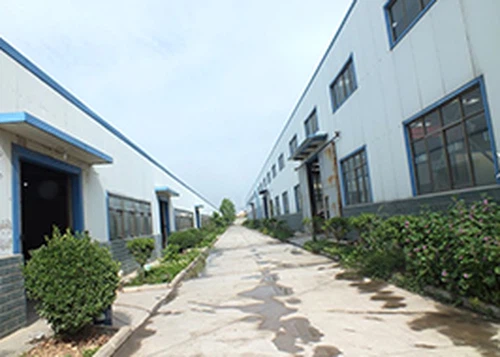
Our Factory
Baoji Pelifly Titanium Industry Co., Ltd is a high-tech enterprise engaged in the research, production, and sales of Titanium and Nitinol alloy and Refractory metal. Our company is located in Baoji High-Tech Development Zone which is the famous "China Titanium Valley". We have advanced equipment, Fully automatic control ALD vacuum consumable arc furnace, Hydraulic press, precision wire rod rolling machine, forging machine, centerless grinding machine, pulling and straightening machine, sawing machine, CNC machine tools, and milling machine and other production equipment, aerospace, medical high-end titanium alloy materials 1000 tons of production capacity.



Ultimate FAQ Guide to Nitinol(Niti) SMA
As one of the leading nitinol(niti) sma manufacturers and suppliers in China, we warmly welcome you to buy high-grade nitinol(niti) sma for sale here from our factory. from our factory. All our products are with high quality and competitive price.
Gr1 Astm B265 Titanium Sheets, Titanium Sheet, Titanium Wheel Lug Nut